
Meaningful photography is not always about finding the most dramatic landscape, mastering another technique or creating an image that attracts attention online. Sometimes, a photograph matters because of a memory, a familiar place or a small detail that other people might overlook. For me, landscape and nature photography have become ways to pay closer attention to the world around me and to the experiences I carry into it. In this article, I explore how personal connections, mindful observation and a willingness to photograph what genuinely interests us can help us rediscover the reasons we pick up a camera.
The Unseen Story Behind the Image
I had been trying to photograph a forget-me-not for some time. The flower's association with remembrance and enduring love made it especially meaningful to me because of my Nan, who lived with dementia and Alzheimer's disease.
The photograph shows a small blue flower, its rain-dusted petals catching the light. What it cannot show is the relationship, memory and loss I brought to the moment. That part of the story exists beyond the frame, but it changes how I see the finished image.
Some photographs impress us immediately. Others become important because of the person, place, memory, or experience attached to them. Sometimes the same image does both. There is no contradiction between making a visually beautiful photograph and making one that holds personal significance.
The difficulty begins when we believe every photograph must justify itself through somebody else’s approval. We look for bigger landscapes, more dramatic light, better equipment, and subjects already known to attract attention. Meanwhile, the things that genuinely interest us can become easy to overlook.
What might happen if we asked a different question before lifting the camera?
Instead of asking whether a photograph will impress somebody, we could ask why the subject has held our attention in the first place.
That single question has changed the way I think about the places I visit, the subjects I photograph, and the stories I choose to tell.
What Makes a Photograph Meaningful?
There is no universal answer because meaning is personal.
A photograph might be important because it records a family member, preserves a moment during a difficult period, captures a landscape you have returned to for years, or reminds you of a day when something unexpectedly caught your attention.
It might also be meaningful because you enjoyed making it. Perhaps you spent an afternoon experimenting with light, found an unusual detail in an ordinary object, or finally achieved the composition you had been trying to make work.
Not every photograph needs a story. Curiosity, play, beauty, and the satisfaction of learning are perfectly good reasons to pick up a camera.
Mindful photography is about the way we approach making an image: slowing down, observing carefully and allowing ourselves time to notice what is happening around us. Meaningful photography is about the significance an image holds, whether that comes from a personal memory, a creative discovery or the experience of making it. For me, the two often meet when I return to a familiar place and allow the details to reveal themselves without demanding a particular result.
What matters is recognising that a photograph’s significance is not determined by a single measure.
Technical quality matters. So do composition, light, colour, focus, and the decisions that turn a scene into an image. Craft allows us to communicate more clearly what attracted us to a subject.
But a technically accomplished photograph does not automatically become personally important. Equally, a photograph that means a great deal to its maker does not have to be flawless to deserve keeping.
Imagine two photographs of the same stretch of river. One has extraordinary light and an elegant composition. The other was taken on an ordinary morning and reminds its photographer of a period of life they do not want to forget.
The first might immediately attract more attention. The second might be the one the photographer returns to years later.
Neither is necessarily the better photograph. They answer different needs.
The important distinction is between the image as an object that other people can see and the experience that made it worth creating.
When the Search for Better Photographs Gets in the Way
Photography offers an endless supply of things to aspire to. There are spectacular locations, celebrated photographers, specialist lenses, and remarkable images circulating online every day.
Learning from other photographers can be invaluable. Studying composition, understanding exposure, and experimenting with unfamiliar techniques can all improve our work. Visiting new places can also expand our visual vocabulary.
The problem is not ambition. It is what happens when ambition becomes the only reason we photograph.
We can begin to measure our own work against images made in exceptional circumstances. The dramatic mountain sunrise becomes the standard by which we judge an ordinary morning. The photograph that receives little attention feels like a failure, even if making it taught us something or captured something we care about.
Social media can intensify this comparison. A photograph’s reception becomes an easy measure of its apparent worth. We begin anticipating what other people might like before we have worked out what we want to say.
Familiar subjects suffer too. If we have walked the same path many times, we may assume there is nothing left to see. If a landscape does not offer an obvious focal point, we might conclude that it is not worth photographing.
Eventually, the search for inspiration becomes another form of pressure. We wait for a spectacular location, an impressive result, or the right conditions before allowing ourselves to feel that we have done something worthwhile.
Yet photography can begin much closer to home.
A familiar place can hold subtle changes in light, weather, and perspective. An overlooked flower can connect with a memory. A failed composition can reveal something about what we actually want from an image.
None of these possibilities requires us to abandon photographic ambition. They simply give ambition a more personal foundation.
Finding Inspiration in Familiar Places
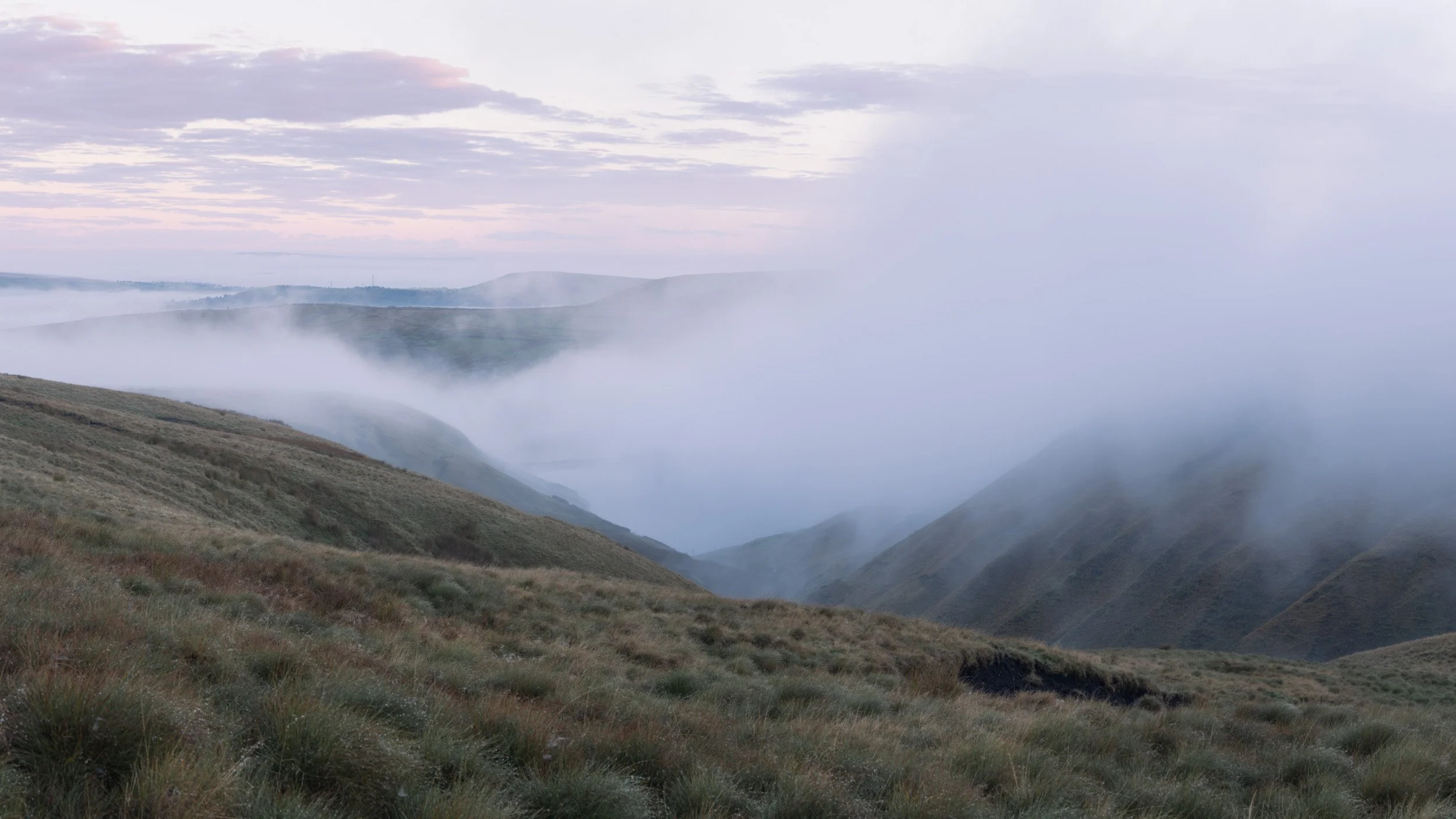
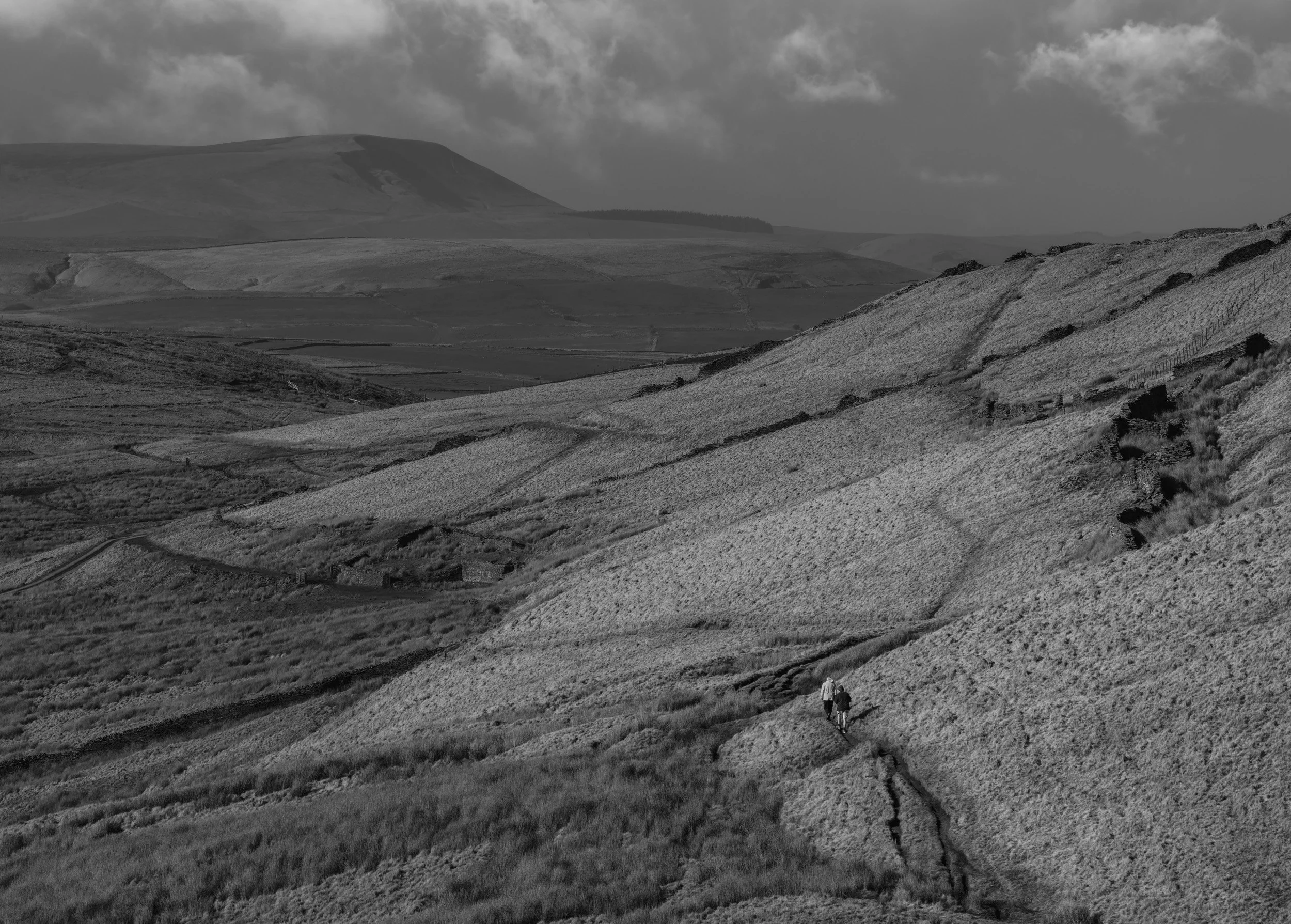
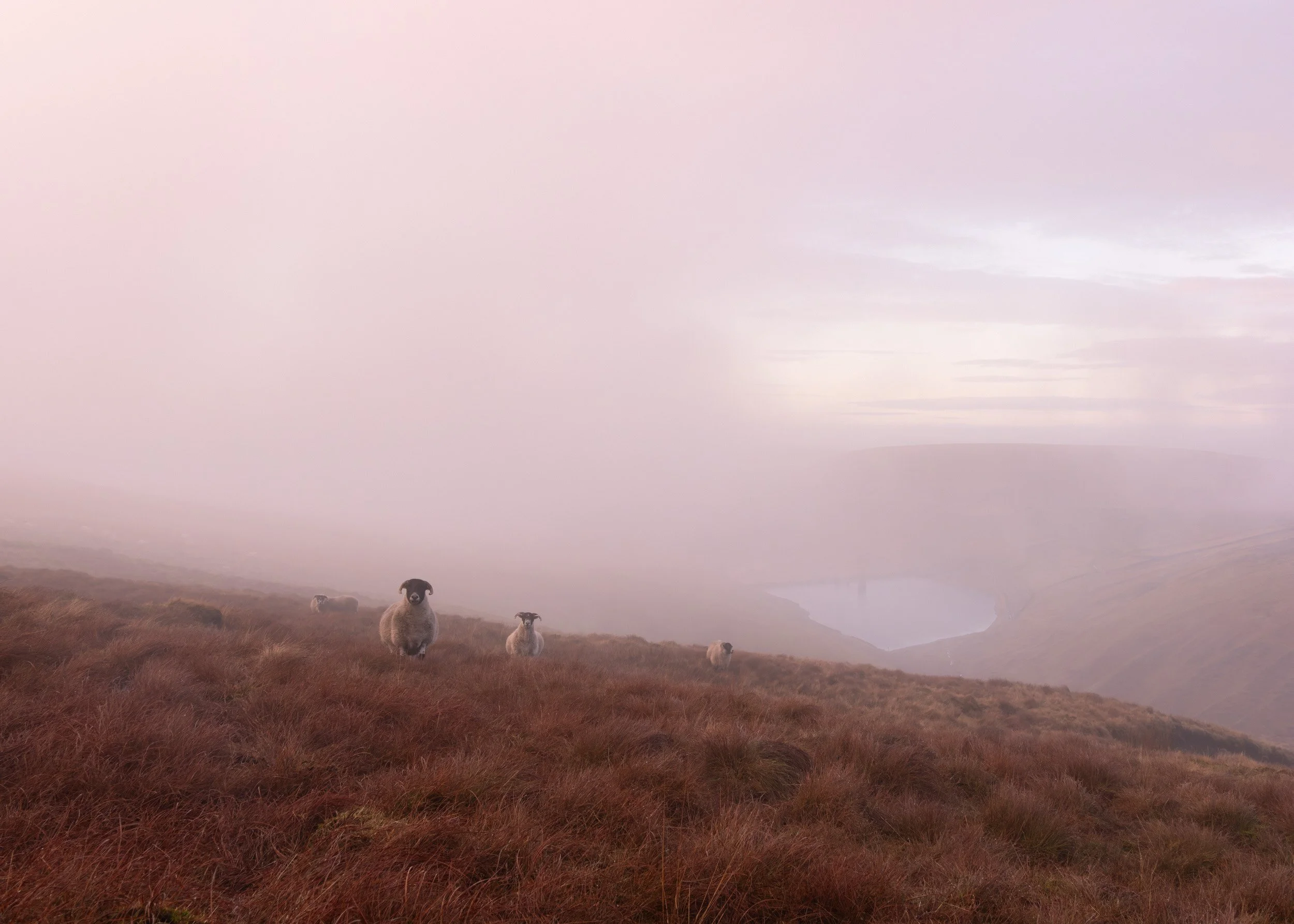
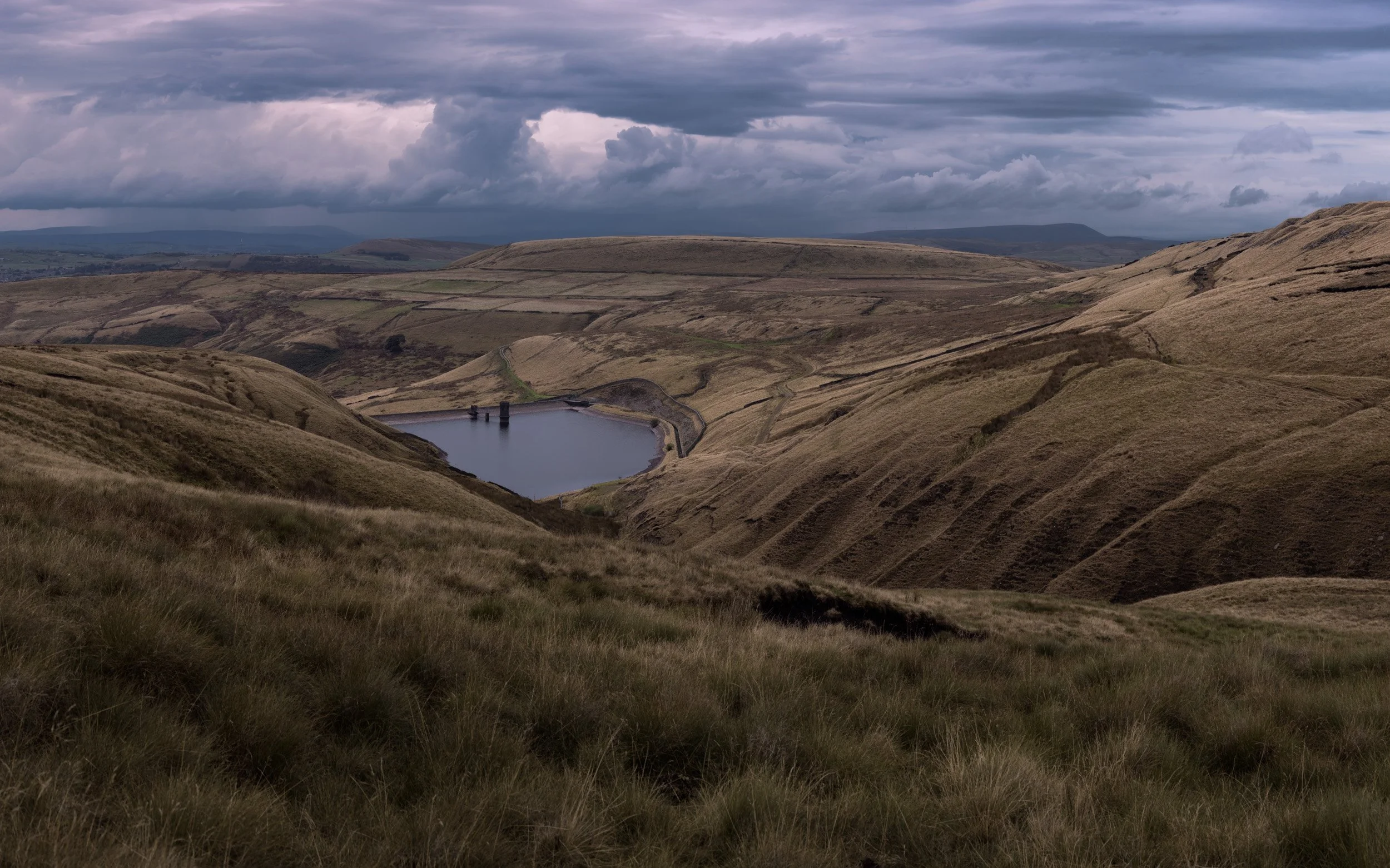
I return repeatedly to Scout Moor in the Southern Pennines. It is not a landscape that always announces itself through dramatic peaks or instantly recognisable viewpoints. Much of its character lies in the quieter details: the peat, the muted grass, the shifting cloud, and the way the land changes under different conditions.
In my photographic essay Still Frames of Time: Mindful Landscape Photography on Scout Moor, I wrote about standing on the moor while the light refused to settle into anything particularly striking. I had brought my camera, but the photograph did not immediately present itself. I stayed, questioned whether the waiting was worthwhile, and gave the place more time.
Repeated visits gradually changed the nature of my work. The location became less of a destination from which I expected a particular result and more of somewhere I could observe over time.
Returning did not mean making the same photograph repeatedly. Light shifted, weather changed, and slight differences in the landscape altered what was available to the camera. Sometimes a visit produced a photograph. Sometimes it produced little more than another period spent looking.
That distinction matters.
When we return somewhere familiar, we arrive with knowledge of what has been there before. We might remember where the ground rises, how a particular view is framed, or where the light fell on an earlier visit. This can help us notice changes that a first-time visitor would not recognise.
Familiarity can narrow our attention, but it can also deepen it. The difference lies in whether we assume we already know everything the place has to offer.
Try visiting your usual location without deciding in advance what the finished photograph should look like.
Spend a little time looking at the scene before reaching for the camera. Notice what has changed and what has not. Look beyond the view you normally photograph.
You may leave with a new image. You may not. Either outcome can be useful, because you are learning to pay attention rather than simply searching for a result that validates the trip.
The Person Behind the Camera Matters
My relationship with photography is connected to the wider experience of my life, including late-diagnosed autism and ADHD and my experience of addiction recovery.
I have written more about that in my personal account of neurodivergence, addiction, and recovery. It is not a neat story in which discovering photography resolved everything. My account is more complicated than that.
Photography did not fix everything. It did, however, offer somewhere for my attention to rest. Spending time outdoors, framing a scene, and waiting for something subtle to emerge became meaningful parts of how I now spend my time.
I have also had to recognise that the way I approach a task does not always match the way I thought I was supposed to approach it. For years, effort and pressure seemed like the obvious answers to difficulties with focus and consistency. Learning more about my neurodivergence gave me language for some of those experiences, although it did not make every difficulty disappear.
That context matters to my photography because it shapes the questions I ask and the conditions in which I want to work.
Returning to a place can offer continuity. A slow session can leave room to look without having to produce an immediate result. Attention can wander and return. A camera gives me a practical way to explore a subject rather than requiring me to arrive with a complete idea of what I intend to make.
None of this means that autism or ADHD automatically makes somebody a particular kind of photographer. Nor does it mean that a slow, reflective approach is better than energetic experimentation or fast-paced documentary work.
Different people find different things absorbing. The useful lesson is more individual: pay attention to the subjects and ways of working that genuinely hold your interest, and be wary of treating somebody else’s process as a standard you must meet.
Your photography does not have to resemble mine. It does not even have to resemble the photography you admire most.
It needs room to develop from your own observations, interests, and experiences.
When a Small Subject Holds a Larger Story
The forget-me-not photograph is an example of why personal significance cannot always be read from the finished image.
I had been trying to photograph a forget-me-not for some time. The flower’s associations with remembrance and enduring love were already relevant to me because of my Nan and her experience of dementia and Alzheimer’s disease.
The photograph was made in the woodland beside the River Roch, working close to the ground among the small blue flowers. The rain-dusted petals offered details that were easy to miss when simply walking past.
The resulting image is a photograph of a flower. Its meaning to me reaches far beyond that description.
I have explored the subject further in Where Forget-Me-Nots Grow, my flower photography story and poem.
I do not expect every viewer to bring the same experience to the image. Some might see a delicate wildflower. Others might associate it with a person they have lost, or with someone whose memory is changing. Someone else might simply appreciate the colour and detail.
All those responses can exist alongside one another.
This is one of the things I value about photography: the image can remain open to other people’s interpretations while retaining its particular place in the maker’s life.
You do not have to make a photograph that explains everything. Sometimes the image can be a record of a subject that matters to you, and the story can be shared separately for those who want to know more.
The Story Behind a Photograph Is Not Always Solemn
There is another side to personal photography. Sometimes the experience behind the image is awkward, ridiculous, or funny.
My marsh orchid photograph, Parallel Dream, shows a purple flower in sharp focus, surrounded by soft, out-of-focus bird’s-foot trefoil and another orchid. The background falls away into gentle colour, allowing the main subject to stand apart.
The finished composition is quiet and controlled.
Making it was less elegant.
I was lying at ground level among tall reeds beside a public footpath, working to frame the orchid while the surrounding vegetation softened into the background. Once I had finished, I pushed myself upright to stretch. Emerging suddenly from the reeds, camera and mud included, I startled a woman walking her dog. The dog took off along the path, with its owner following in considerable haste.
The image does not reveal that encounter. Nothing in the finished composition suggests the unexpected performance that took place just outside the frame.
The story is part of what I remember about making the photograph, and it gives me another reason to revisit it. It also reminds me that a photograph can be carefully constructed without the experience behind it being particularly dignified.
You can see the image and the full account in The Story Behind Parallel Dream.
I include this because meaningful photography does not have to be serious to be worthwhile. Some images preserve grief or remembrance. Others recall an unexpected encounter, a moment of curiosity, or an experience that makes you laugh long after the event.
The connection is not the emotion itself. It is the fact that the subject and the circumstances of making the image mattered enough to stay with you.
How to Discover What Matters to You as a Photographer
You do not need to wait for a subject to reveal itself. You can begin by paying attention to the patterns already present in your photographic life.
Look through a selection of your existing images:
Which ones do you remember making most clearly?
Which subjects keep returning?
Are there photographs that matter more to you now than they did when you took them?
Try not to judge the selection by technical quality alone. Notice what you are drawn towards, even when you cannot immediately explain why.
Perhaps you repeatedly photograph empty paths, overlooked plants, changing weather, or the same stretch of coastline. Maybe your favourite images are associated with a particular person, an important period of life, or the satisfaction of learning a technique.
Those patterns are clues, not rules. You do not need to turn every interest into a signature style or force yourself to keep photographing something after it has stopped holding your attention.
A personal style often emerges through repeated choices. The subjects you notice, the compositions you favour, the details you include, and the images you decide to keep can gradually give your work a recognisable character.
You do not need to manufacture that character in advance, nor must it remain unchanged. What interests you now may change with your circumstances, knowledge, and experience.
One useful question is this: What would I photograph if I knew the finished image did not have to impress anyone?
The answer may be a landscape you have photographed dozens of times. It may be a small flower, a weathered wall, an abandoned building, or a subject that has no obvious appeal to anyone else.
That is a perfectly good place to begin.
Five Ways to Find Inspiration in Photography
If photography has begun to feel like a search for the next impressive image, try making the process smaller and more personal. You could explore an ordinary subject, revisit a familiar location, photograph something connected to a memory, spend time observing before lifting the camera, or create a short series around one idea. These exercises are starting points, not rules; choose the approach that feels interesting and manageable to you.
1. Photograph something you normally overlook
Choose an ordinary subject near your home: a plant growing through a crack, a familiar doorway, an everyday object, or a detail in a garden. Spend ten minutes exploring it photographically. Try a different distance, viewpoint, or background. Look for changes in texture and light rather than assuming that the subject itself must be extraordinary.
2. Return to a familiar place
Choose somewhere you can visit without significant expense or complicated planning—a local park, a woodland path, a stretch of river, or a familiar street. Visit more than once at different times of day or in varying weather. This removes the pressure to find somewhere new and helps you explore somewhere you already know.
3. Choose a subject with a personal connection
Think of a person, memory, interest, or experience you want to explore through photography. You do not have to photograph the person or event directly; you might photograph a familiar place associated with someone or an object that has remained important to you.
4. Observe before raising the camera
At your next photographic session, give yourself a short period just to look before making any photographs. Notice the obvious subject first, then look around it. What sits at the edge of the frame? Does the scene change as clouds pass or the wind moves vegetation?
5. Make a small photographic series
Choose one subject or theme and make a set of three to five photographs. Give each image a different purpose: one establishes surroundings, another shows a detail, and a third reveals something unexpected. A small project helps you explore an idea without needing a definitive masterpiece every time you go out.
As an optional final step, write a sentence or two about the experience. Those notes may prove as useful to you later as the photographs themselves.
Developing Your Style Without Chasing Approval
It is natural to want other people to appreciate your work. Photography is a visual medium, and sharing images can be an enjoyable part of making them. Feedback can also help us see strengths and weaknesses we overlooked.
The difficulty comes when external approval becomes the main measure of whether a photograph was worth making.
A lack of attention does not mean an image has failed. Equally, a popular photograph can be excellent, and there is nothing wrong with wanting to create work that connects with a wider audience.
The aim is not to stop caring what anybody thinks. It is to make room for your own judgement alongside those opinions.
Over time, you may begin to recognise recurring preferences in your work. You might become more interested in subtle light than spectacular sunsets, intimate details than wide vistas, or the character of a place than its most recognisable view.
If you want to learn from other photographers, study their choices and techniques without assuming you need to reproduce their results. Work out what interests you about their images, then experiment with those ideas in subjects that matter to you.
A Simple Challenge: Photograph What You Would Keep to Yourself
For your next photographic session, set aside the question of what might attract the most attention.
Choose one subject that holds your interest — a familiar landscape, a small detail, or something connected to a personal memory. Spend time looking at it. Make the photograph you want to make.
Then ask yourself three questions:
Why did I choose this subject?
What did I notice while photographing it?
Would I still value this image if nobody else ever saw it?
You do not need to produce a profound answer. You might simply enjoy the subject, appreciate the light, or want to remember a particular place. That is enough.
Keep the photograph, along with a brief note about the experience, and return to it in a few weeks. See whether your understanding of it changes.
Look Again at What Is Already in Front of You
I still return to familiar landscapes. I still photograph small subjects. Some images carry personal associations that matter to me; others preserve an interesting composition or an unexpected experience behind the camera.
They do not all need to serve the same purpose.
What connects them is the willingness to pay attention to something long enough to decide whether it is worth photographing. Sometimes the subject announces itself immediately. Sometimes its significance becomes clearer afterwards.
I have learned not to demand that every photograph justify the time spent making it through spectacle or recognition. There is room for technical ambition, experimentation, and the pleasure of producing an image that other people enjoy. There is also room for photographs that matter primarily to the person who made them.
The next time you feel you have nothing worth photographing, look again at the subjects you already know. Consider what you repeatedly return to, which details catch your attention, and what you might want to preserve.
You may not need a new location, a better camera, or a more dramatic view. You may only need to recognise why something has held your attention in the first place.
If you would like to explore more of the experiences behind my photographs, visit Stories from the Landscape, where photography, nature, poetry and personal reflection come together.
If the quieter details of the South Pennines attract you, you can explore my landscape photography gallery and discover the places and moments that continue to shape my work.
And when you next pick up your camera, consider one last question:
What would you photograph if you no longer needed to impress anyone else?